| The idea | Your brain runs on minerals, circulation and cellular energy — support those with named nutrients rather than a stimulant jolt. |
| Six to know | Magnesium glycinate, alpha lipoic acid, butcher’s broom, L-carnitine, turmeric and coenzyme Q10. |
| How to use them | Consistency beats intensity — a steady daily routine matters more than any single dose. |
| Read the label | Favour formulas that name every active over a vague “focus blend.” |
The word nootropic gets thrown around a lot, and it has drifted a long way from its original meaning. In everyday supplement language it simply describes nutrients, botanicals and compounds that are studied for their role in ordinary brain function — memory, focus, and the steady mental energy that gets you through a normal day. It is not a promise of genius, and in a dietary-supplement context it should not mean a hidden stimulant. The most useful nootropic ingredients are usually familiar, food-derived nutrients your body already knows what to do with.
That distinction matters because a lot of “brain” products lean on caffeine or other stimulants to create a fast, obvious effect that fades just as quickly. A nutrient-first approach works differently: instead of borrowing energy you will pay back later, it aims to supply the raw materials — minerals, antioxidants and cellular-energy nutrients — that healthy brain function draws on over time.
Before we get to the ingredients themselves, one habit is worth building: read the Supplement Facts panel, not the front of the box. A trustworthy formula names each active and, wherever possible, shows the amount. Be a little more cautious when a large share of a product hides inside a proprietary blend, because that structure can obscure how much of any single ingredient you are actually getting. None of this is a red flag on its own — proprietary blends are common and legal — but transparency is something you can see, and it is a reasonable thing to reward with your money.
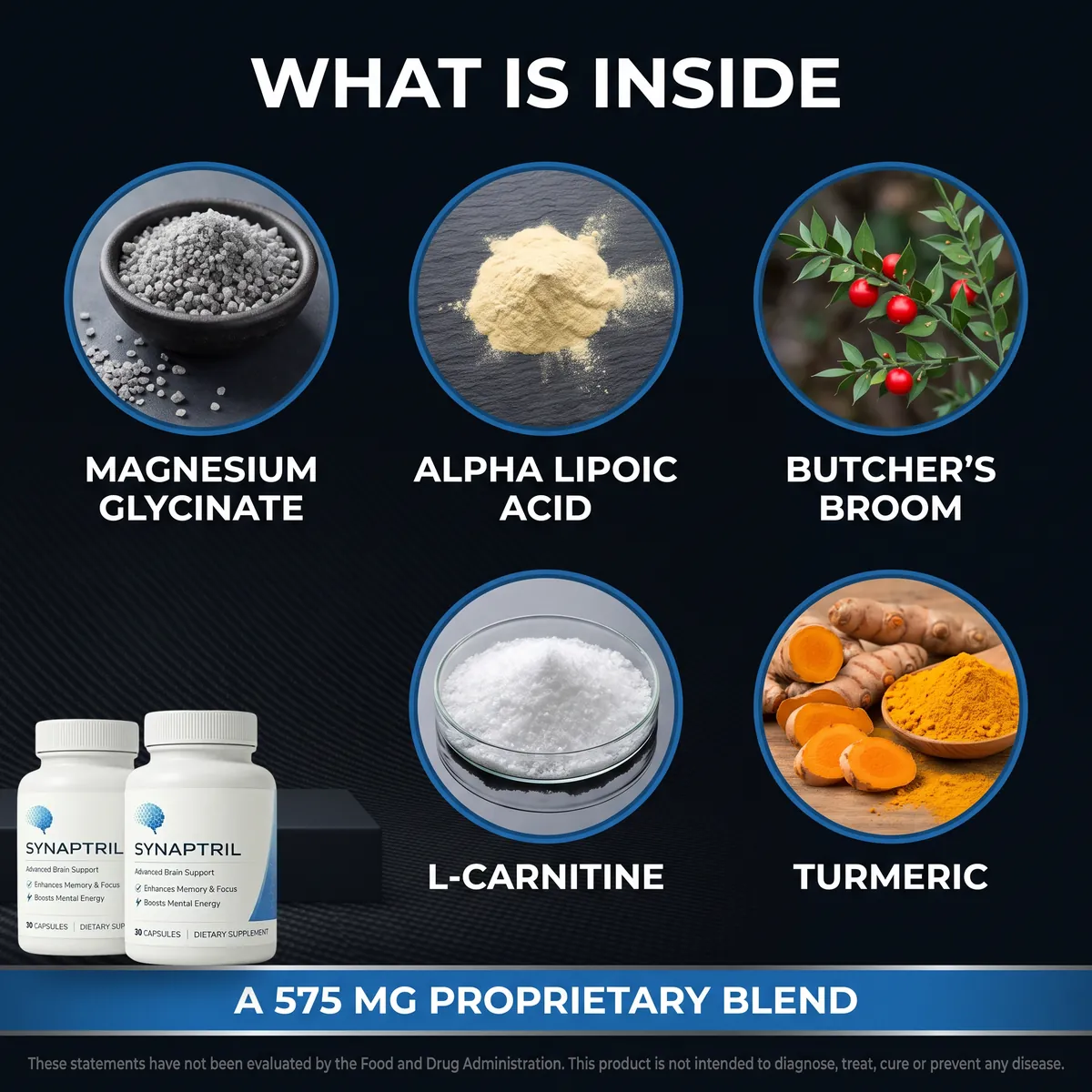
With that framing in place, here are six ingredients that show up again and again in credible brain-support formulas, including our own Synaptril, along with a plain-language note on why each one earns its spot.
Magnesium is a genuine workhorse mineral, involved in hundreds of enzyme reactions across the body, including the nerve signalling that underlies clear thinking. The catch is that many modern diets fall short of the recommended intake. Magnesium glycinate is a chelated form — the mineral is bound to the amino acid glycine — and it is prized for being gentle on the stomach and well absorbed, which makes it a sensible choice when the goal is steady, everyday support rather than a quick fix.
Alpha lipoic acid is an unusual antioxidant because it is both water- and fat-soluble, so it can work in more parts of a cell than most. It is studied for its role in helping the body defend cells against everyday oxidative stress — the ordinary wear-and-tear that comes with living, breathing and using energy. In a brain-support context, that antioxidant role is the reason ALA turns up alongside minerals and energy nutrients.
Butcher’s broom is a traditional botanical with a long history of use in supporting healthy circulation. Why does that belong in a brain formula? Because the brain is an extraordinarily hungry organ that depends on a steady supply of oxygen- and nutrient-rich blood. Ingredients traditionally associated with healthy circulation are included on the logic that good blood flow is part of the everyday foundation for focus and recall.
L-carnitine is an amino-acid derivative with a very specific job: it helps shuttle fatty acids into the mitochondria, the tiny “engines” inside your cells that produce usable energy. Since the brain is one of the most energy-demanding tissues you have, ingredients that support cellular energy production are a natural fit for a formula built around clean mental energy rather than a caffeine spike.
Turmeric is the golden spice behind curry, but its interesting compounds — the curcuminoids — are concentrated when the extract is standardised, commonly to 95%. Curcuminoids are widely studied for their antioxidant and general wellness support. Standardisation matters here: it is the difference between a pinch of kitchen spice and a measured, consistent amount of the active compounds.
Coenzyme Q10 sits at the heart of cellular energy production and doubles as a natural antioxidant. The body’s highest-energy tissues rely on it, and levels can vary with age and diet. That combination — energy support plus antioxidant activity — is why CoQ10 is a cornerstone ingredient in formulas designed for daily mental energy.
Synaptril puts magnesium glycinate, alpha lipoic acid, butcher’s broom, L-carnitine, turmeric and CoQ10 into a single once-daily capsule — every active named on the label, backed by a 60-day guarantee.
See Synaptril PackagesThe best routine is the one you will actually keep, so start with the basics that no capsule replaces. Aim for consistent sleep, drink enough water, move your body most days, and eat a diet with plenty of whole foods. Those habits do the heavy lifting; a supplement is there to help cover the nutritional gaps that even a good diet can leave.
When you do add a formula, treat consistency as the active ingredient. Nutrient-based support tends to build gradually, so pick a time of day you will remember — with breakfast, or beside your toothbrush — and take it the same way each day. A once-daily capsule wins here precisely because there is nothing to mix, measure or stack, which removes the friction that quietly sinks most routines by the second week.
Honest expectations are part of a good routine. Nutrient-based ingredients are not stimulants, so the experience is less “switch flips on” and more “the afternoon fog feels a little lighter over a few weeks.” Individual results vary, and no supplement replaces sleep, nutrition and movement. If a product promises dramatic, overnight, guaranteed outcomes, treat that as a marketing claim rather than a scientific one — and read the label instead.
Finally, a sensible safety note. Talk to your physician before starting any new supplement if you take medication, have a medical condition, or are pregnant or nursing. Do not exceed the recommended dose, and remember that statements about ingredients here describe traditional or general use, not medical advice.
One capsule, six named actives, no stimulants — give your brain the daily support it may be missing.
Order Synaptril Today“Nootropic” is an umbrella term for nutrients, botanicals and compounds that are studied for their role in everyday brain function — things like memory, focus and mental energy. In a dietary-supplement context it usually means named, food-derived ingredients such as magnesium, turmeric or coenzyme Q10, not stimulants or medications.
Nutrient-based ingredients tend to build their support gradually as part of a consistent daily routine, rather than delivering an instant jolt the way caffeine does. Most people give a formula several weeks of daily use before judging how it fits their day.
Magnesium glycinate is a chelated form in which magnesium is bound to the amino acid glycine. It is generally chosen for being gentle on the stomach and well absorbed, which is why it is a common pick in brain-support formulas. The “best” form depends on your goals and how your body responds.
Look for named actives with amounts you can see, check whether a proprietary blend hides individual doses, and note the serving size and directions. A transparent label names each ingredient rather than hiding it behind a vague “focus blend.”
Magnesium earns its place on a brain-support label on background rather than on a single trial. A review of magnesium in cognitive health, depression, migraine and Alzheimer's disease sets out its role in nerve signalling and the observational links between magnesium status and cognitive outcomes — useful context, though a narrative review is not a demonstration that supplementation improves memory in well-nourished adults.
The form on the label is a real variable, not marketing. A comparison of magnesium diglycinate against magnesium oxide found the chelated glycinate form better absorbed than the oxide form, which is the substantive reason to prefer a glycinate on a panel. Note the limit honestly: that study was conducted in patients following bowel surgery, not in healthy adults.
Carnitine is where labels and literature most often part company, so read this carefully. A meta-analysis of acetyl-L-carnitine against placebo in mild cognitive impairment reported benefit — but it tested acetyl-L-carnitine, in people who already had cognitive impairment. Plain L-carnitine, the form named on most supplement panels including Synaptril's, is a different compound, and the evidence above should not be read across to it.
Turmeric is best described for what the trials measured rather than what the marketing implies. A GRADE-assessed meta-analysis of curcumin and turmeric supplementation in adults found consistent effects on antioxidant and inflammatory markers. Those are biochemical outcomes, not cognitive ones, and describing turmeric as antioxidant support is accurate in a way that calling it a memory ingredient is not.
Knowing what each active does is the groundwork for three further decisions: a nootropic stack versus a single supplement covers whether to buy those actives combined or separately, how a nutrient formula compares with an energy drink asks whether the whole category delivers enough to be worth buying, and the safety questions worth asking about any nootropic explains why the same ingredient list can be sold at wildly different prices depending on where you shop.
† These statements have not been evaluated by the Food and Drug Administration. This product is not intended to diagnose, treat, cure or prevent any disease. This article is for general information only and is not medical advice. Consult your physician before beginning any new supplement.
 Synaptril